01
September 24, 2026
Selling on Zalando: The Complete Guide for Fashion Brands

From click to parcel: everything that happens while Cyber Monday moves at the speed of millions of orders
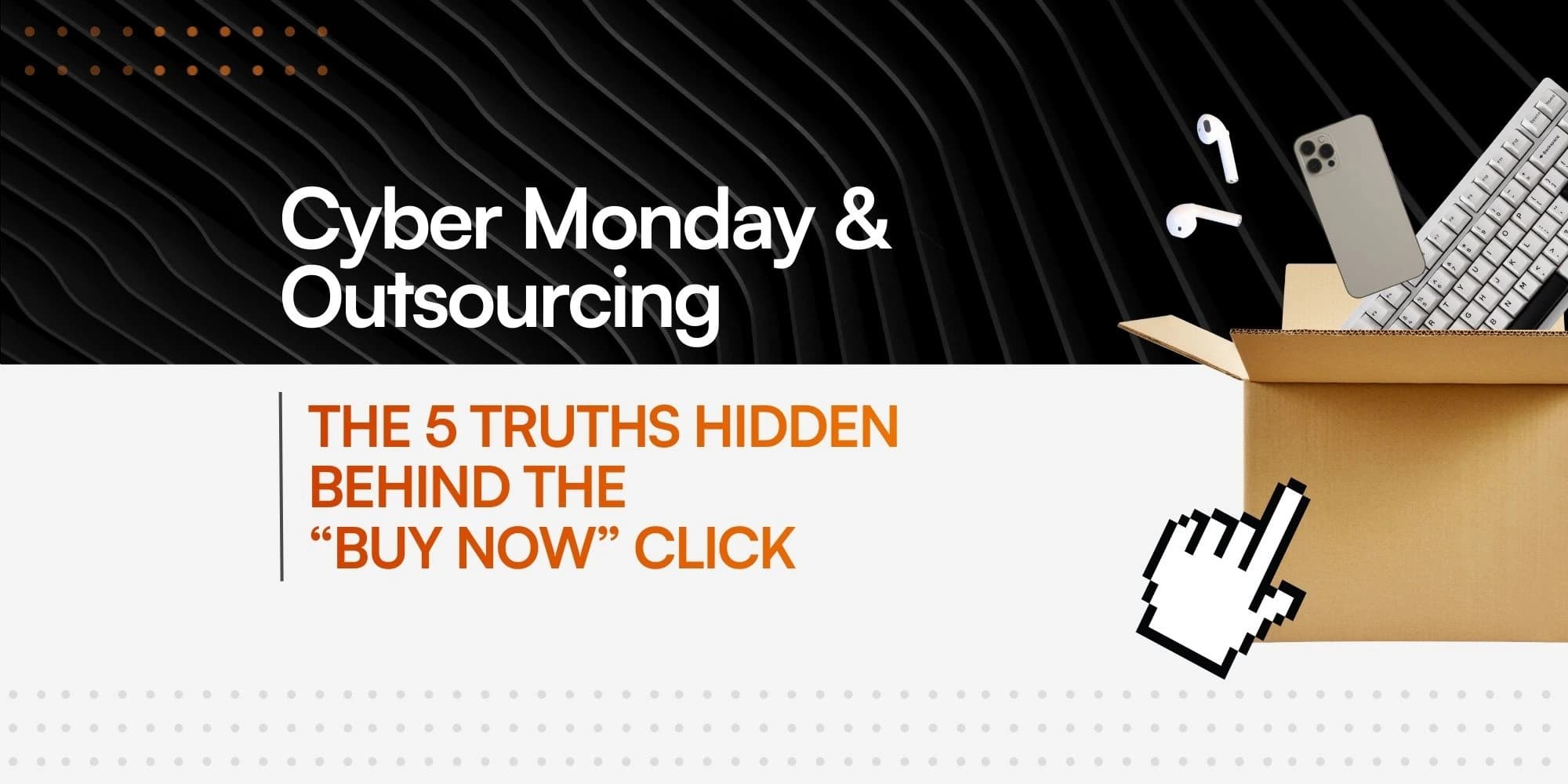
Cyber Monday is a modern ritual. The hunt for the best deal, the adrenaline rising as the timer counts down, the thrill of finding the desired item at an unbeatable price. It all culminates in a gesture that has become almost instinctive: a click on the "Buy Now" button. In an instant, the transaction is complete, and the wait for the parcel begins.
This apparent simplicity, however, is just the tip of the iceberg. Behind that single click lies an operational, logistical, and technological machine of impressive complexity, pushed to its limits on this peak day.
Before exploring what happens behind the scenes, it’s worth recalling a few key points:
What is Cyber Monday? It is a day of discounts primarily dedicated to online shopping. Originating in the United States, it has become a global event that ideally closes the long Black Friday weekend, with offers often focused on electronics, technology, clothing, and home goods.
When is Cyber Monday 2025?
In 2025, Cyber Monday falls on Monday, 1 December.

1. The real scale: not millions, but tens of millions per minute
To understand the true scale of Cyber Monday, one must look at the market that invented it: the US. In 2024, online sales reached a record $13.3 billion in a single day, and forecasts for 2025 estimate around $14 billion.
The most astonishing figure, however, concerns the concentration of sales. During peak evening hours, typically between 8:00 p.m. and 10:00 p.m., cash flow can exceed $15 million per minute. Beyond the pressure on servers, this represents a resilience test for the entire tech supply chain, challenging payment gateways, fraud detection algorithms operating in milliseconds, and inventory systems that must synchronise in real time across multiple platforms to avoid selling out-of-stock products.
2. In Italy, Cyber Monday doesn’t really exist. It merges with Black Friday
While these staggering figures define the global benchmark, the Italian market has a unique dynamic, where Cyber Monday doesn’t exist as a standalone event but is the tail end of a long promotional period starting with Black Friday. Official estimates almost always aggregate data from the two events, treating them as a single block.
For 2025, online turnover for the entire period is expected to reach around €2.2 billion, with a 7% increase compared to the previous year.
This “merger” transforms the strategy from a 24-hour sprint into a promotional marathon, with critical impacts on stock planning, staff management, and advertising budget allocation, putting margins at risk if not handled precisely.
3. The battle is won (and lost) on the smartphone screen
The main battleground for online commerce is no longer the home computer but the device we carry in our pocket. In 2024, around 57% of all online revenue was generated through purchases made via smartphones.
This trend is expected to remain stable or grow slightly in 2025. For sellers, the strategic implication is unavoidable. A site that isn’t mobile-optimised offers a poor user experience and an instant loss of over half of potential customers. The analysis goes beyond smooth navigation and includes integrating one-click payment options like Apple Pay, Google Pay, and PayPal, which reduce friction at checkout, and strategically using push notifications to recover abandoned carts.
4. The biggest challenge isn’t selling, it’s shipping millions of parcels
While millions of consumers complete their purchases with a simple tap on the screen, retailers face the real race against time: turning those clicks into millions of physical parcels. The estimated €2.2 billion in Italian sales translates into an impressive volume: approximately 41 million parcels handled in the 10 days around Black Friday and Cyber Monday.
The pressure on the logistics chain is immense, shifting strategic focus from marketing to operations. Logistics has become the new brand promise.
According to the Netcomm B2C eCommerce Observatory, for 2025, 65% of Italian e-commerce operators are investing in logistics and customer care in preparation for these sales peaks.
An exceptional discount is forgotten if delivery is late or the parcel arrives damaged. The post-purchase experience, orchestrated by logistics, represents the final and most enduring point of contact with the brand, determining real customer satisfaction. [We discussed this during the Forum Retail 2025 – read more >]
5. The secret to success? Increasingly, it’s outsourcing
How do companies handle such extreme demand peaks without collapsing? The answer is increasingly a business model choice: outsourcing.
This represents a strategic shift from a capital-intensive model (CAPEX), such as building and managing owned warehouses, to a flexible operational-cost model (OPEX), paying for services only when needed.
This trend is confirmed by various industry authorities. Shopify Italy, for example, advises sellers to rely on fulfillment networks to scale logistical capacity, while eDesk highlights how companies are focusing on automation and outsourced customer care to manage the surge in requests.
Closing the loop, EcommerceDay emphasises how this approach increases flexibility and limits operational risks, allowing brands to focus on their core business.
For the consumer, there is only one brand on the parcel, but behind it lies a complex and invisible chain of specialised partners.