01
August 19, 2026
Outsourcing guide for supplement and haircare e-commerce
Health & Pharma Market Analysis and New Digital Strategies for 2026
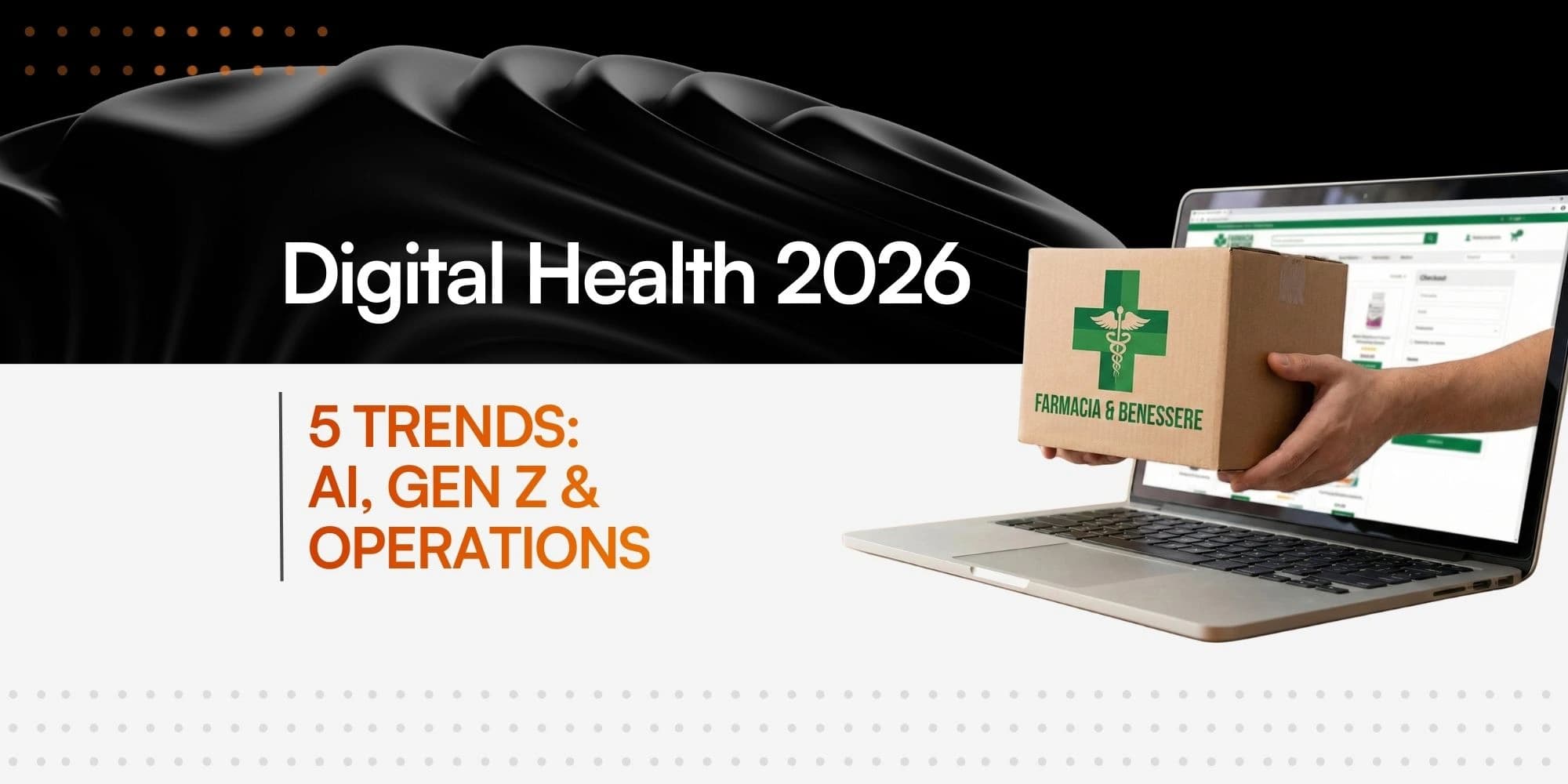
The online health and wellness sector in Italy enters 2026 as a mature and structural reality. Consolidated data from the past year (Netcomm Digital Health & Pharma Observatory) presents a market that has exceeded the €2.139 billion threshold, bolstered by a 7.4% growth rate.
Buying medicines and supplements online is now a well-established habit for Italians. Focus must therefore shift to the evolution of this behaviour. The latest data clearly shows that the game is won through operational excellence and the ability to satisfy complex requests, moving beyond a pure price-driven logic.

Let’s analyse the five fundamental drivers that every e-Commerce Manager must master in the coming year:
1. AI as an Information Assistant Seeing Artificial Intelligence and Chatbots among preferred channels has become the norm. The true turning point for 2026 concerns the purpose of these technologies: people use them to deeply understand what they are buying, leaving the decision of where to purchase for a later moment or a different channel.
29.5% of users use AI to clarify health-related doubts.
30.8% seek specific instructions on usage (dosage, interactions).
For merchants, evolving customer service is essential. The 2026 shopper demands technical and instantaneous answers. Intelligent automation thus finds its primary purpose in managing information requests, as satisfying initial curiosity is the primary gateway to a sale.
2. Gen Z: The Most Loyal Target to Secure One of the most valuable data points inherited from 2025 deconstructs the stereotype of young people as "fickle" consumers. Under-35s are confirmed as the segment with the highest retention rate: 51% always or often buy from the same merchant, compared to a general average of 44%.
Gen Z loyalty is not accidental. It is earned through impeccable service: delivery speed, transparent tracking, and a seamless mobile experience. For brands, investing today in logistics and User Experience (UX) for this target means securing a high Customer Lifetime Value (CLV) for years to come.
3. "Pharma Influencers" Dictate the Pace of Logistics Social media has shifted from being a brand awareness channel to a direct sales driver. With 14.5 million Italians interested in health topics on social platforms, the impact on the shopping basket is measurable and massive.
9 out of 10 buyers (within the health-interested cluster) purchased based on a creator's recommendation.
27.7% of under-24s buy based on influencer advice.
Operationally, this trend brings significant challenges. Influencer marketing campaigns generate sudden, concentrated order spikes. E-commerce managers must have a flexible logistics structure, capable of scaling rapidly to handle abnormal volumes without stock-outs or delays.
4. The Victory of Simplicity and the Habitual Consumer Despite technological evolution, the market is primarily supported by habitual consumers (42% of the total). This user profile exhibits extremely linear buying behaviour: they visit their trusted site and purchase, with fewer than one intermediate touchpoint.
"Digital Power Buyers," who browse over six channels before purchasing, remain a niche (8%). The strategy for 2026 must therefore prioritise frictionless experiences. A fast checkout, simplified reordering options, and a clean interface are more powerful revenue levers than any complex functionality.
5. Total Hybridisation Between Physical and Digital The distinction between channels has definitively collapsed; even those purchasing in physical stores are now digital users. In 41.5% of cases, the offline purchase choice was decided by online research (reviews or product data sheets).
This phenomenon (ROPO – Research Online, Purchase Offline) indicates that e-commerce is not an isolated silo. Information on the digital store must be accurate and up-to-date because it directly influences the sell-out of the physical pharmacy.
The 2026 scenario reveals a solid but operationally complex Pharma market. Managing customer loyalty, absorbing social-media-driven spikes, and maintaining hybrid customer care requires specific resources and expertise.
T-Data supports brands in the Health & Pharma sector by managing the entire operational infrastructure:
Scalable Logistics to guarantee fast deliveries and manage promotional peaks.
Stream Integration to unite online and offline data.
Specialised Customer Care to address users' technical information needs.
Fiscal and Regulatory Management for secure operations across European markets.
Partnering with a specialist allows brands to transform these market challenges into competitive advantages, freeing up internal resources to focus on brand growth.