01
September 24, 2026
Selling on Zalando: The Complete Guide for Fashion Brands

A guide to reverse logistics to improve margins and customer experience for your online shop
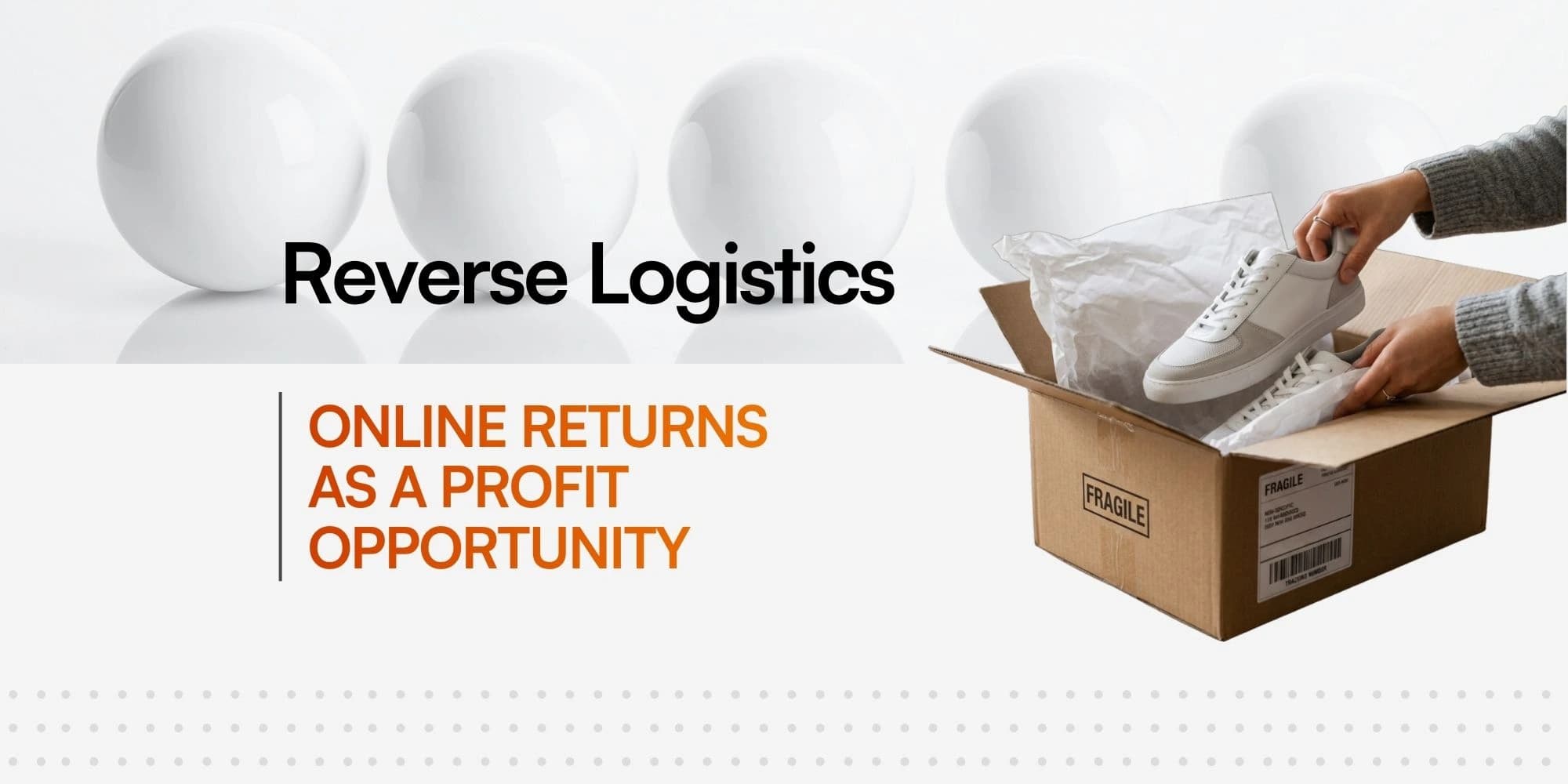
With reverse logistics, or backward logistics, one defines the set of practices and processes intended to manage returns and the return of products from points of sale or end customers towards the initial producer. This backward flow in the supply chain is aimed at performing repairs, recycling or disposal at the lowest possible cost. Since e-commerce transformed the market, return logistics has assumed a central role in business operations. The consolidated data from the Netcomm B2c eCommerce Observatory – Politecnico di Milano confirm that 2025 closed in Italy with over 35 million online buyers and a market value of approximately 62 billion euros. However, this growth brings with it what a recent analysis by Tendenze Online defines as a "costly burden". In Europe, the average for returns now touches 30%, while in Italy the phenomenon appears even more marked with almost four orders out of ten returning to the sender, requiring flexible strategies and omnichannel models to remain competitive.
Reverse logistics manifests in different operational forms depending on the need of the customer or the company. Some common examples include:
Return due to dissatisfaction: the customer returns a product that does not reflect expectations.
Management of defective products: return of items with imperfections for repair or replacement.
Recovery of surplus: return to the warehouse of seasonal or unsold stock.
Circular economy: collection of reusable packaging or end-of-life components for recycling.
Picking errors: return of incorrect items caused by errors in the SKU code during picking.

The return is an integral part of the purchasing journey and must not be considered as the end of the relationship with the customer, but as a service opportunity.
A complicated process discourages future sales, while a "frictionless" return logistics policy acts as a powerful conversion driver. The transparency and simplicity of restitution mitigate "buyer's remorse" and solidify trust in the brand.
An exemplary case of the return as a loyalty lever: Imagine a customer who purchases a dress for an imminent event, but receives the wrong size. In a traditional model, the anxiety of the procedure and the long times would lead to the definitive loss of the customer. On the contrary, an online store that offers an immediate exchange with home collection and simultaneous delivery of the new garment transforms the inconvenience into an experience of excellence. The customer, reassured by the speed and the absence of bureaucratic burdens, will pass from being a disappointed purchaser to a promoter of the brand, increasing their Life Time Value.
To optimise this experience, companies must adopt tools that guarantee autonomy and clarity:
Self-service portals: intuitive interfaces to manage the case in a few clicks without having to contact assistance.
Paperless options: use of QR codes for delivery at collection points, eliminating the need to print labels.
Real-time tracking: push notifications or emails that inform the customer about the arrival of the parcel in the warehouse and the issuance of the refund.

Reverse logistics requires dedicated infrastructure since managing a return flow involves costs on average 33% higher than direct logistics. An evolved gatekeeping guarantees speed and protection of operating margins through the automatic reconciliation of products and the timely identification of the 9% of fraudulent returns that, according to NRF data, still burdens the sector. The main operations to optimise this phase include:
Refurbishment: restoring the product to new for resale.
BORIS (Buy Online, Return In-Store): bringing the customer back into the shop, reducing shipping costs and favouring upselling.
Advanced WMS: software capable of identifying the origin of the return and assigning a new location without interrupting warehouse cycles.
The best reverse logistics is that which never happens. Reducing returns at the source represents an economic imperative as well as a sustainability challenge, considering that globally the transport of returned products generates 23 million tonnes of CO₂ per year. By delegating the complexity of operations to an external partner, brands can finally stop chasing logistical urgencies and concentrate on product quality and the effectiveness of communication. Free from operational weights, teams can empower the prevention strategy through:
Advanced product sheets: the investment of time in high-resolution photos, videos and detailed reviews drastically reduces the gap between expectation and reality.
Virtual Try-On: the integration of Augmented Reality (AR) to virtually try on clothes or accessories allows the customer to choose with greater awareness.
Data analysis: the use of clean and structured data allows for the identification of SKUs with anomalous return rates, promptly correcting factory defects or misleading descriptions.
T-Data supports brands in this complexity by managing hybrid catalogues, coordinating stock rotations and providing the infrastructure for real multichannelling. Thanks to mechanised sorting systems and proprietary software, we transform reverse logistics from a cost into a growth opportunity.