01
September 24, 2026
Selling on Zalando: The Complete Guide for Fashion Brands

The pet products market is growing, with online sales driving consumption. Here are the insights from the 2026 Assalco-Zoomark Report and the operational solutions for managing eCommerce
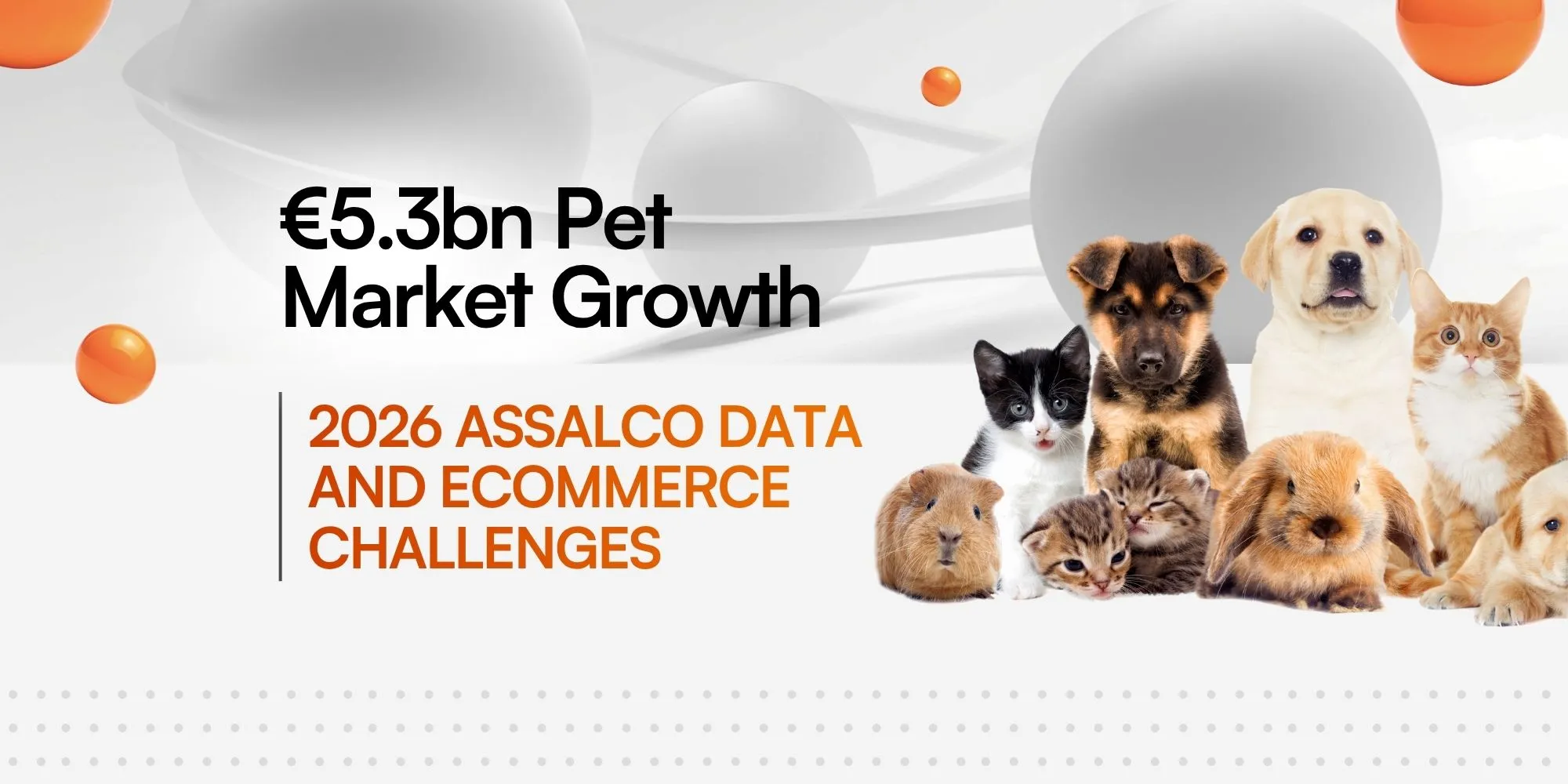
The pet care and pet food sector in Italy confirms solid and structural growth.
According to data from the 19th edition of the 2026 Assalco-Zoomark Report, the overall market combining pet food and pet care reached a value of €5.3 billion in 2025, recording a 2.5% increase compared to the previous year.
This evolution is supported by a new omnichannel data collection method that integrates sales from Grocery Retail, specialised chains, and eCommerce channels, offering a comprehensive overview of the sector.
For eCommerce managers and directors, understanding the dynamics of this expansion is essential for structuring efficient digital sales channels capable of meeting demand.
The sector is proving to be particularly dynamic over the medium term. Between 2022 and 2025, the compound annual growth rate (CAGR) for pet food was 6.9%, outperforming the average for Fast-Moving Consumer Goods (FMCG) by two percentage points. The prominent data highlights a clear segmentation between different product categories and distribution channels:
Pet Food: Dog and cat food account for 79% of total sales, reaching a value of €4.2 billion.
Cat Segment: This drives consumption with over €2.3 billion in turnover (56% of the total), led mainly by wet food and treats.
Dog Segment: Reaches €1.8 billion with a 0.7% increase.
Pet Care and Accessories: The sector exceeds one billion euros. Within this macro-category, cat hygiene and health products grew by 18%, while cat litter reached a value of €328.2 million.
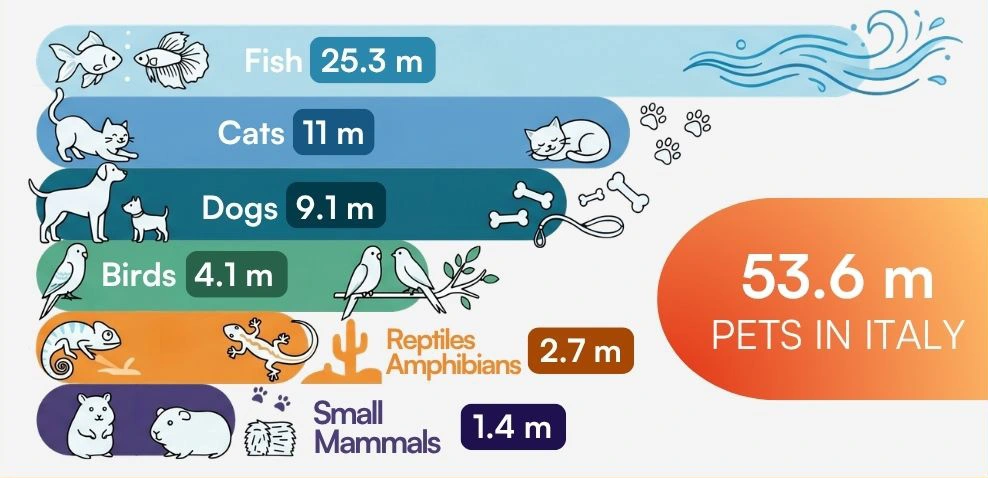
This push towards consumption is linked to a widespread presence of pets in Italian homes. It is estimated that there are 53.6 million total pets in the country, with fish representing the largest population (25.3 million), followed by 11 million cats and 9.1 million dogs. These are followed by 4.1 million birds, 2.7 million reptiles and amphibians, and 1.4 million small mammals.
More than half of Italian families (54.5%) house at least one pet.
Consumer purchasing habits show a progressive shift towards premium, functional, and specific products for animal well-being.
This change has redefined the weight of sales channels: traditional grocery retail shows signs of a slowdown, in favour of channels offering a greater depth of assortment.
In this context:
The Specialised channel (comprising traditional pet shops and chains) holds a 40.9% share of total sales, with a value of €1.7 billion.
The Online channel is consolidating its position as a strategic point of reference, particularly for the accessories and pet care segment, where it covers shares of around 18% of overall sales.
The expansion of the digital market in the pet sector introduces specific complexities in the management of business processes. Anyone managing a proprietary eCommerce site or selling via marketplaces must coordinate rigorous operational workflows:
Expiry date management: Pet food requires constant monitoring of batches and expiry dates to ensure product compliance.
Storage and logistics for heavy loads: Large bags of kibble and packs of litter present high weights and volumes, which impact storage costs and require optimised shipping contracts to avoid operational bottlenecks.
Omnichannel integration: Modern consumers demand flexibility, such as the ability to check stock availability in real time or to take advantage of click-and-collect services.
For brands wanting to seize the opportunities of a €5.3 billion market without burdening their internal structure, outsourcing operations represents a strategic choice.
T-Data supports companies in the pet care and pet food sector by managing the entire operational and eCommerce infrastructure:
Logistics and regulatory compliance: Coordination of complex catalogues, management of production batches, expiry dates, and real-time tracked shipments.
Merchant of Record (MoR) solutions: Integrated management of taxation, invoicing, and transactions, simplifying sales both on proprietary channels and on the main European marketplaces.
Specialised Customer Care: Structured pre- and post-sales support to respond to customer inquiries, reducing cart abandonment rates and improving customer loyalty.
Entrusting operational complexity to an external partner allows brands to focus on product development and marketing strategies, maintaining the flexibility needed to follow market growth.
If you would like to evaluate how to optimise the logistical and fiscal processes of your pet sector eCommerce, contact us for a technical consultation with our specialists.